CS210 : Scientific Computing : Fall 2026
Lectures: MW 09:30 AM - 10:50 AM, Riverside Campus | North District | Room A1010
Professor:
Tamar Shinar (shinar@cs.ucr.edu)
Professor Office hours: Mondays, after class, WCH 419
Textbooks:
Freely available to UCR students.
Textbooks are for recommended for additional self-study. The related sections are noted on the topics page.
Numerical Algorithms, by Justin Solomon (pdf from author)
Scientific Computing, by Michael T. Heath (available online through UCR library)
Other resources:
Install Matlab (UCR licensed) or Octave (free).
Browser-based Octave online.
Linear Algebra and Learning from Data, by Gilbert Strang
Numerical Linear Algebra, by David Bau III and Lloyd N. Trefethen
Course Synopsis
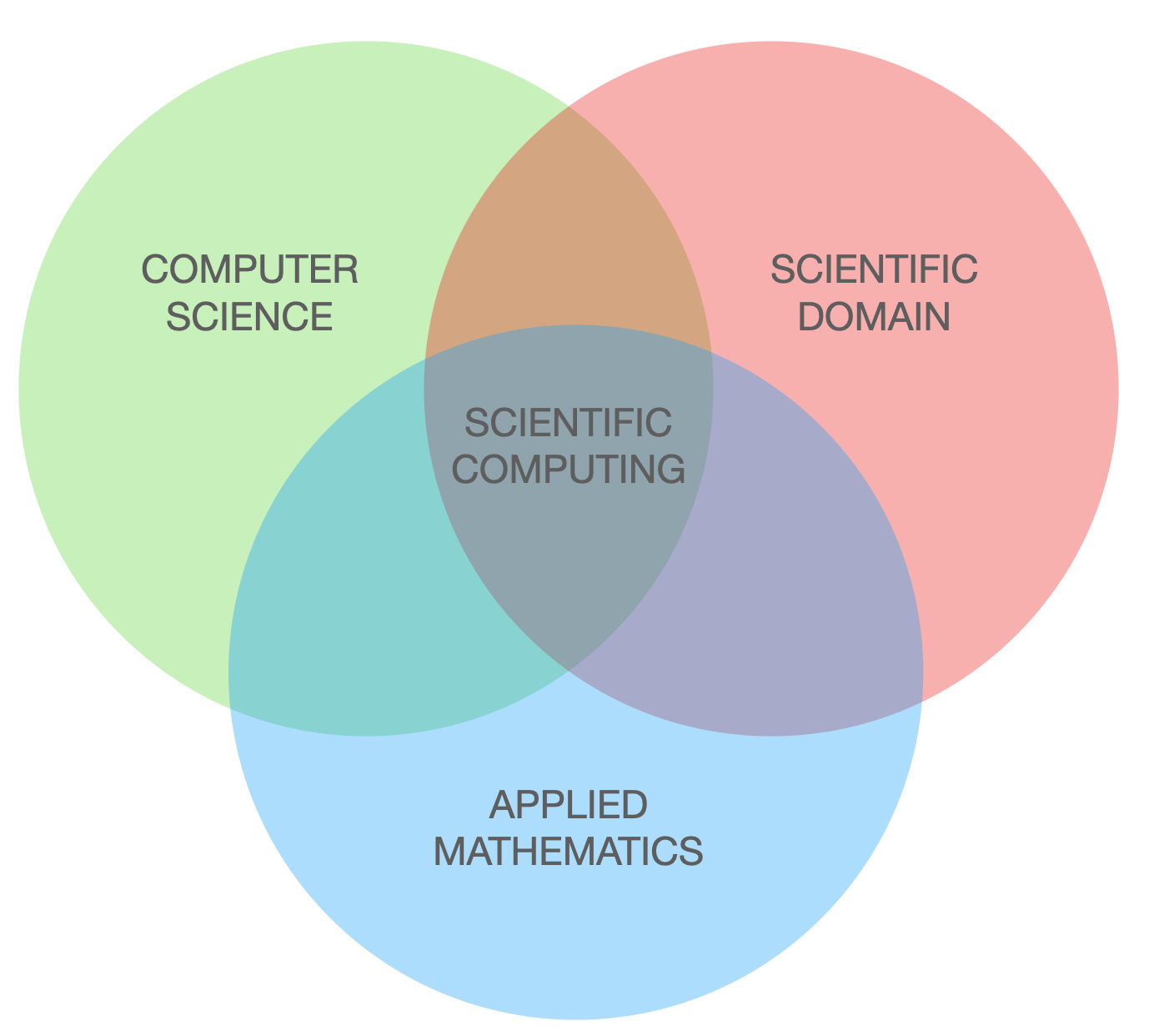
This course provides an introduction to key concepts and methods in
scientific computing, focusing on topics in numerical linear algebra.
These include solution of linear systems of equations, triangular
systems, matrix decompositions, orthogonality, singular value
decomposition, least squares, and eigenvalue problems. The goal is to
give students a solid foundation in practical computations with
matrices and prepare students to use scientific computing in their
area (e.g. graphics, vision, robotics, machine learning, data mining,
etc.). As time permits, additional topics include nonlinear equation
solving via Newton's method and fixed point iteration.
Grading
| Percentage |
|---|
| Homework | 30% |
|---|
| In-class participation | 5% |
|---|
| Midterm | 30% |
|---|
| Final | 35% |
|---|
Homework will be weekly (with possible exceptions) and should be completed individually. The lowest homework grade will be dropped in computing your total homework score.
Late Homework. Late homework may be submitted up to the time solutions are posted, for a penalty of -10%/day, and a maximum penalty of -50%.